
1
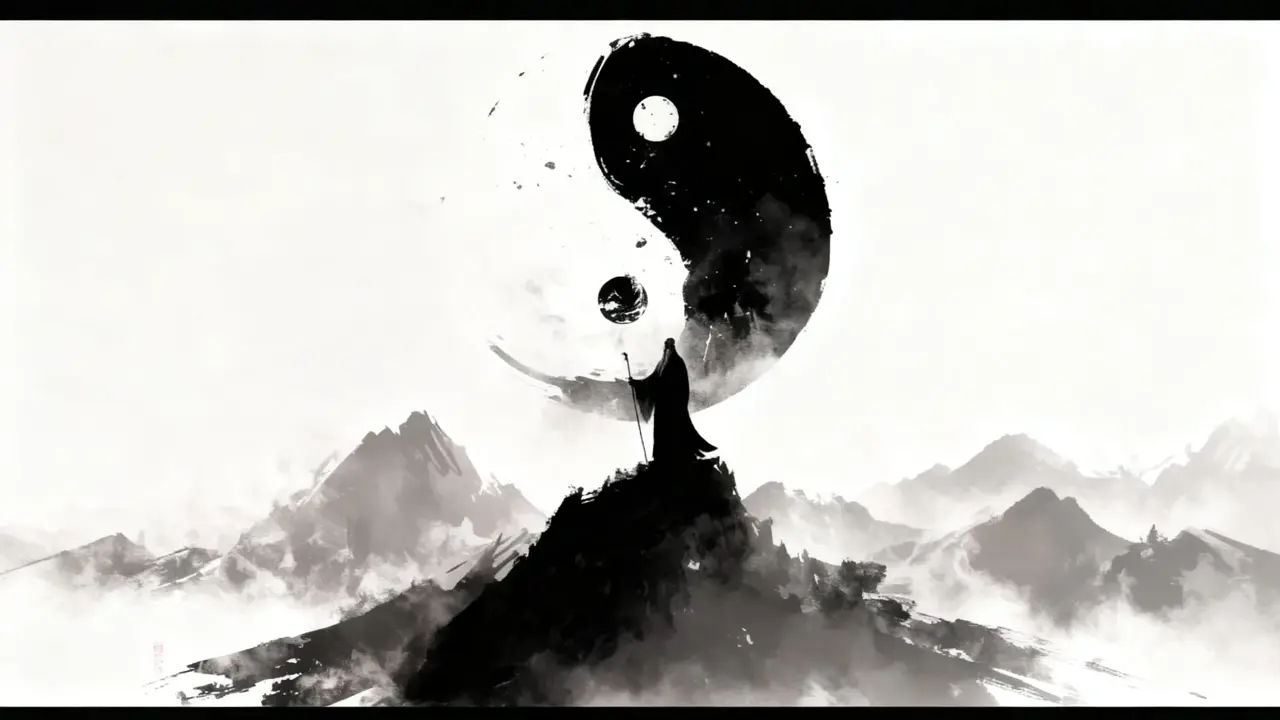
As Heaven is high and noble and Earth is low and humble, so it is that Qian [Pure Yang, Hexagram 1] and Kun [Pure Yin, Hexagram 2] are defined. {W.B: It is because Qian and Kun provide the gateway to the Changes that the text first makes clear that Heaven is high and noble and Earth is low and humble, thereby determining what the basic substances of Qian and Kun are.1} The high and the low being thereby set out, the exalted and the mean have their places accordingly. {W.B: Once the innate duty of Heaven to be high and noble and that of Earth to be low and humble are set down, one can extend these basic distinctions to the myriad things, so that the positions of all exalted things and all mean things become evident.} There are norms for action and repose, which are determined by whether hardness or softness is involved. {W.B: Hardness means action, and softness means repose. If action and repose achieve normal embodiment, the hardness and softness involved will be clearly differentiated.2} Those with regular tendencies gather according to kind, and things divide up according to group; so it is that good fortune and misfortune occur. {W.B: Thus similarities and differences exist, and gatherings and divisions occur. If one conforms to things with which he belongs, it will mean good fortune, but if one goes against things with which he belongs, misfortune will result.} In Heaven this [process] creates images, and on Earth it creates physical forms; this is how change and transformation manifest themselves. {W.B: “Images” here are equivalent to the sun, moon, and the stars, and “physical forms” here are equivalent to the mountains, the lakes, and the shrubs and trees. The images so suspended revolve on, thus forming the darkness and the light; Mountain and Lake reciprocally circulate material force [qi],3 thus letting clouds scud and rain fall.4 This is how “change and transformation manifest themselves.”} In consequence of all this, as hard and soft stroke each other, {W.B: That is, they urge each other on, meaning the way yin and yang stimulate each other.} the eight trigrams activate each other. {W.B: That is, they impel each other on, referring to the activation that allows change to fulfill its cyclical nature.}
It [the Dao] arouses things with claps of thunder, moistens them with wind and rain. Sun and moon go through their cycles, so now it is cold, now hot. The Dao of Qian forms the male; the Dao of Kun forms the female. Qian has mastery over the great beginning of things, and Kun acts to bring things to completion. {W.B: The Dao of Heaven and Earth starts things perfectly without deliberate purpose and brings them to perfect completion with no labor involved. This is why it is characterized in terms of ease and simplicity.}
Qian through ease provides mastery over things, and Kun through simplicity provides capability. As the former is easy, it is easy to know, and as the latter is simple, it is easy to follow. If one is easy to know, he will have kindred spirits; and if one is easy to follow, he will have meritorious accomplishments. {W.B: This is to be in accord with the innate tendencies of the myriad things, thus the text says, “He will have kindred spirits,” and here one is in tune with the design inherent in all things in the world, thus the text says: “He will have meritorious accomplishments.”} Once one has kindred spirits, he can endure, and once one has meritorious accomplishments, he can grow great. {W.B: With the virtues of ease and simplicity, one will achieve meritorious accomplishments that can endure and be great.} Being able to endure is inherent in a worthy man’s virtue, and being able to grow great is inherent in the enterprise of the worthy man. {W.B: Because of the ease and simplicity of Heaven and Earth, each of the myriad things carries the outer form of what it is. The worthy man does not act with deliberate purpose, yet of all the methods he might employ, each and every one will bring about his enterprise. Once virtue is realized and enterprise accomplished, these then become translated into concrete form. Thus it is by means of the worthy man that we are allowed to lay eyes on the virtue and enterprise [of Heaven and Earth].}
It is through such ease and simplicity that the principles of the world obtain. {W.B: Every single principle in the world derives from ease and simplicity, thus each thing manages to behave commensurate with its particular position.} As the principles of the world obtain in this way, they form positions here between them [Heaven and Earth]. {W.B: “Form positions” means the way the images are perfectly constituted. Only something capable of the utmost ease and simplicity will be able to provide a channel for the principles of the world. As these [hexagrams] provide channels for the principles of the world, they are able to form images and so provide links to Heaven and Earth. As the text says “between them,” such links are clearly to Heaven and Earth.}
It [the Dao] arouses things with claps of thunder, moistens them with wind and rain. Sun and moon go through their cycles, so now it is cold, now hot. The Dao of Qian forms the male; the Dao of Kun forms the female. Qian has mastery over the great beginning of things, and Kun acts to bring things to completion. {W.B: The Dao of Heaven and Earth starts things perfectly without deliberate purpose and brings them to perfect completion with no labor involved. This is why it is characterized in terms of ease and simplicity.}
Qian through ease provides mastery over things, and Kun through simplicity provides capability. As the former is easy, it is easy to know, and as the latter is simple, it is easy to follow. If one is easy to know, he will have kindred spirits; and if one is easy to follow, he will have meritorious accomplishments. {W.B: This is to be in accord with the innate tendencies of the myriad things, thus the text says, “He will have kindred spirits,” and here one is in tune with the design inherent in all things in the world, thus the text says: “He will have meritorious accomplishments.”} Once one has kindred spirits, he can endure, and once one has meritorious accomplishments, he can grow great. {W.B: With the virtues of ease and simplicity, one will achieve meritorious accomplishments that can endure and be great.} Being able to endure is inherent in a worthy man’s virtue, and being able to grow great is inherent in the enterprise of the worthy man. {W.B: Because of the ease and simplicity of Heaven and Earth, each of the myriad things carries the outer form of what it is. The worthy man does not act with deliberate purpose, yet of all the methods he might employ, each and every one will bring about his enterprise. Once virtue is realized and enterprise accomplished, these then become translated into concrete form. Thus it is by means of the worthy man that we are allowed to lay eyes on the virtue and enterprise [of Heaven and Earth].}
It is through such ease and simplicity that the principles of the world obtain. {W.B: Every single principle in the world derives from ease and simplicity, thus each thing manages to behave commensurate with its particular position.} As the principles of the world obtain in this way, they form positions here between them [Heaven and Earth]. {W.B: “Form positions” means the way the images are perfectly constituted. Only something capable of the utmost ease and simplicity will be able to provide a channel for the principles of the world. As these [hexagrams] provide channels for the principles of the world, they are able to form images and so provide links to Heaven and Earth. As the text says “between them,” such links are clearly to Heaven and Earth.}
2
The sages set down the hexagrams and observed the images. {W.B: This is the general summary [of what follows].} They appended phrases to the lines in order to clarify whether they signify good fortune or misfortune and let the hard and the soft lines displace each other so that change and transformation could appear. {W.B: It is by appending phrases that they clarified the good fortune and the misfortune involved, and it is by allowing the strong and the weak lines to displace each other that this good fortune and misfortune were brought to light. Good fortune and misfortune are inherent in the affairs of men, and change and transformation are inherent in how things go through their natural cycles.} Therefore, good fortune and misfortune involve images respectively of failure or success. {W.B: Because there is failure and success, good fortune and misfortune occur.} Regret and remorse involve images of sorrow and worry. {W.B: When the signs of failure or success are such that they do no more than cause sorrow and worry, the texts say “regret” and “remorse.”} Change and transformation involve images of advance and withdrawal. {W.B: Going forth prompts a coming back and vice versa; this means advance and withdrawal in turn.} The strong and the weak provide images of day and night. {W.B: If it is day, then it is yang and strong, and if it is night, then it is yin and weak. The text here first provides a general discussion of good fortune and misfortune, change and transformation, and then after that separately clarifies what is involved with regret and remorse, day and night. Regret and remorse are the equivalents of good fortune and misfortune, and, for their part, day and night are constituents of the change and transformation that make up the Dao. As regret and remorse belong with good fortune and misfortune, they rely in the same way on appended phrases to have their meaning made clear, and as day and night are constituents of the Dao of change and transformation, they equally become manifest through the strong and the weak. Thus the text begins with a general summary, then clarifies the difference between the greater and lesser types of failure and success, and finally distinguishes between the major and minor aspects of change and transformation. This is why the concepts involved are dealt with separately in this sequence.} The movement of the six hexagram lines embodies the Dao of the three ultimates {W.B: The three ultimates are the three powers [Heaven, Earth, and Man]. As the hexagrams are commensurate with the Dao of the three powers, they are able to reveal good fortune and misfortune and realize change and transformation.}
Therefore what allows the noble man to find himself anywhere and yet remain secure are the sequences presented by the Changes. {W.B: Sequences [xu] mean the succession of images [xiang] in the Changes.5} What he ponders with delight are the phrases appended to the lines. Therefore, once the noble man finds himself in a situation, he observes its image and ponders the phrases involved, and, once he takes action, he observes the change [of the lines] and ponders the prognostications involved. This is why, since Heaven helps him, “it is auspicious” and “nothing will fail to be advantageous.”
Therefore what allows the noble man to find himself anywhere and yet remain secure are the sequences presented by the Changes. {W.B: Sequences [xu] mean the succession of images [xiang] in the Changes.5} What he ponders with delight are the phrases appended to the lines. Therefore, once the noble man finds himself in a situation, he observes its image and ponders the phrases involved, and, once he takes action, he observes the change [of the lines] and ponders the prognostications involved. This is why, since Heaven helps him, “it is auspicious” and “nothing will fail to be advantageous.”
3
The Judgments [tuan] address the images, {W.B: A Judgment sums up the concept of an entire hexagram.} and the line texts address the states of change. {W.B: Each line text addresses itself to the change involved with that line.} The terms auspicious and inauspicious address the failure or success involved. The terms regret and remorse address the small faults involved. The expression there is no blame indicates success at repairing transgressions. Therefore the ranking of superior and inferior depends on the positions. {W.B: Where a line is situated is called a position. Among the six positions, there are those that are noble and those that are humble.} Distinction between a tendency either to the petty or to the great is an inherent feature of the hexagrams. {W.B: Hexagrams are devoted either to tendencies to the petty or to the great. Distinction here means the same as “differentiation,” which is what happens when “the Judgments address the images.”6} The differentiation of good fortune and misfortune depends on the phrases. {W.B: “The phrases” are the line texts. This is what is meant by “the line texts address the states of change.” It is by addressing the images that the petty and the great are brought to light, and it is by addressing change that good fortune and misfortune are clarified. Therefore concepts of either pettiness or greatness are inherent to the hexagrams, and the states of good fortune and misfortune are revealed in the phrases. As for regret, remorse, and “no blame,” they follow the same routine. Good fortune, misfortune, remorse and regret, “small fault,” and “no blame” all are produced by change, but since affairs include both the petty and the great, the text later addresses the differences among these five in turn.} The means to make one anxious about regret and remorse depend on the subtle, intermediate stages [jie]. {W.B: Jie means “small matters.” Wang Bi states [in section three of his General Remarks]: “Once one encounters occasions where one should be anxious about remorse and regret, even small matters must not be treated lightly.” Thus, remorse and regret are addressed to small faults.7} The means to arouse one so to have “no blame” depends on remorse. {W.B: The reason one suffers no blame is that he is good at repairing mistakes.} Arouse means “to move.” Thus to be moved so as to be without blame is inherent in the remorse one feels for one’s mistakes. This is why there are hexagrams that deal with decrease and those that deal with growth [of the Dao], and why there are appended phrases that impart a sense of danger and those that impart a sense of ease. {W.B: When this Dao shines brightly, it is said to be growing large, and when the Dao of the noble man is dwindling, it is said to be decreasing. If a hexagram is tending toward Peace [Tai, Hexagram 11], its phrases impart a sense of ease, but if a hexagram is tending toward Obstruction and Stagnation [Pi, Hexagram 12], its phrases impart a sense of danger.} The phrases, in fact, in each case indicate the direction taken.
4
The Changes is a paradigm of Heaven and Earth, {W.B: [The sages] made the Changes in order to provide a paradigm of Heaven and Earth.} and so it shows how one can fill in and pull together the Dao of Heaven and Earth. Looking up, we use it [the Changes] to observe the configurations of Heaven, and, looking down, we use it to examine the patterns of Earth. Thus we understand the reasons underlying what is hidden and what is clear. We trace things back to their origins then turn back to their ends. Thus we understand the axiom of life and death. {W.B: The hidden and the clear involve images that have form and that do not have form. Life and death are a matter of fate’s allotment for one’s beginning and end.} With the consolidation of material force into essence [jingqi] a person comes into being, but with the dissipation of one’s spirit [youhun], change comes about. {W.B: When material force consolidates into essence, it meshes together, and with this coalescence, a person is formed. When such coalescence reaches its end, disintegration occurs, and with the dissipation of one’s spirit, change occurs. “With the dissipation of one’s spirit” is another way of saying “when it disintegrates.”} It is due to this that we understand the true state of gods and spirits.8 {W.B: If one thoroughly comprehends the principle underlying coalescence and dissipation, he will be able to understand the Dao of change and transformation, and nothing that is hidden will remain outside his grasp.}
As [a sage] resembles Heaven and Earth, he does not go against them. {W.B: It is because his virtue is united with Heaven and Earth that the text says: “resembles them.”} As his knowledge is complete in respect to the myriad things and as his Dao brings help to all under Heaven, he commits no transgression. {W.B: It is because his knowledge comprehensively covers the myriad things that his Dao brings help to all under Heaven.} Such a one extends himself in all directions yet does not allow himself to be swept away. {W.B: Responding to change, he engages in exhaustive exploration but does not get swept away by illicit behavior.} As he rejoices in Heaven and understands Its decrees, he will be free from anxiety. {W.B: As such a one complies with Heaven’s transformations, the text says: “He rejoices.”} As he is content in his land and is genuine about benevolence, he can be loving. {W.B: Being content in one’s land and being genuine about benevolence [ren] are innate tendencies [qing] of the myriad things. If things are allowed to comply with their innate tendencies, then the good effects of benevolence will abundantly grow.9} He perfectly emulates the transformations of Heaven and Earth and so does not transgress them. {W.B: Being a perfect model means to model oneself on Heaven and Earth in such a way that one totally encompasses their principles.} He follows every twist and turn of the myriad things and so deals with them without omission. {W.B: As for following every twist and turn in this way, if one were to respond to things by keeping up with their changes and not being tied to them as they are found in particular places, he would indeed prevail over them!} He has a thorough grasp of the Dao of day and night and so is knowing. {W.B: As he thoroughly grasps the reasons underlying obscurity and brightness, there is nothing he fails to understand.} Thus the numinous is not restricted to place, and change is without substance. {W.B: Everything up to this point is addressed to how the numinous behaves. Regarding things in terms of either place or substance [ti] means to be tied to things that have concrete form [xingqi]. The numinous as such is something not to be plumbed in terms of yin and yang,10 and change as such is something that one can only keep up with in terms of change, and neither can be clarified by reference to particular places or to particular substances.11}
As [a sage] resembles Heaven and Earth, he does not go against them. {W.B: It is because his virtue is united with Heaven and Earth that the text says: “resembles them.”} As his knowledge is complete in respect to the myriad things and as his Dao brings help to all under Heaven, he commits no transgression. {W.B: It is because his knowledge comprehensively covers the myriad things that his Dao brings help to all under Heaven.} Such a one extends himself in all directions yet does not allow himself to be swept away. {W.B: Responding to change, he engages in exhaustive exploration but does not get swept away by illicit behavior.} As he rejoices in Heaven and understands Its decrees, he will be free from anxiety. {W.B: As such a one complies with Heaven’s transformations, the text says: “He rejoices.”} As he is content in his land and is genuine about benevolence, he can be loving. {W.B: Being content in one’s land and being genuine about benevolence [ren] are innate tendencies [qing] of the myriad things. If things are allowed to comply with their innate tendencies, then the good effects of benevolence will abundantly grow.9} He perfectly emulates the transformations of Heaven and Earth and so does not transgress them. {W.B: Being a perfect model means to model oneself on Heaven and Earth in such a way that one totally encompasses their principles.} He follows every twist and turn of the myriad things and so deals with them without omission. {W.B: As for following every twist and turn in this way, if one were to respond to things by keeping up with their changes and not being tied to them as they are found in particular places, he would indeed prevail over them!} He has a thorough grasp of the Dao of day and night and so is knowing. {W.B: As he thoroughly grasps the reasons underlying obscurity and brightness, there is nothing he fails to understand.} Thus the numinous is not restricted to place, and change is without substance. {W.B: Everything up to this point is addressed to how the numinous behaves. Regarding things in terms of either place or substance [ti] means to be tied to things that have concrete form [xingqi]. The numinous as such is something not to be plumbed in terms of yin and yang,10 and change as such is something that one can only keep up with in terms of change, and neither can be clarified by reference to particular places or to particular substances.11}
5
The reciprocal process of yin and yang is called the Dao. {W.B: What is this Dao? It is a name for nonbeing [wu]; it is that which pervades everything; and it is that from which everything derives. As an equivalent, we call it Dao. As it operates silently and is without substance, it is not possible to provide images for it. Only when the functioning of being reaches its zenith do the merits of nonbeing become manifest. Therefore, even though it so happens that the numinous is not restricted to place and change and is without substance, yet the Dao itself can be seen: it is by investigating change thoroughly that one exhausts all the potential of the numinous, and it is through the numinous that one clarifies what the Dao is. Although yin and yang are different entities, we deal with them in terms of the unity of nonbeing. When the Dao is in the yin state, it does not actually exist as yin, but it is by means of yin that it comes into existence, and when it is in the yang state, it does not actually exist as yang, but it is by means of yang that it comes into being. This is why it is referred to as “the reciprocal process of yin and yang.”12} That which allows the Dao to continue to operate is human goodness [shan] and that which allows it to bring things to completion is human nature [xing]. The benevolent see it and call it benevolence, and the wise [zhi] see it and call it wisdom. {W.B: The benevolent make the Dao their resource and so see the benevolence in it, and the wise make the Dao their resource and so see the wisdom in it: each exhausts that respective portion of it.} It functions for the common folk on a daily basis, yet they are unaware of it. This is why the Dao of the noble man is a rare thing! {W.B: The noble man embodies the Dao and applies it as function, but if it is merely the benevolent and wise, then they are limited to just what they see of it, and if it is the common folk, then it functions for them on a daily basis, but they are unaware of it. Those who truly embody this Dao, are they not indeed rare! Thus, as it is said, “always be without desire so as to see its subtlety.”13 This is how one can begin to talk about its perfection and address its ultimate meaning.} It is manifested in benevolence and hidden within its functioning. {W.B: “It gives succor to the myriad things”;14 this is why the text says: “It is manifested in benevolence.” It functions on a daily basis, but they are unaware of it; this is why the text says: “It is…hidden within its functioning.”} It arouses the myriad things but does not share the anxieties of the sages. {W.B: The myriad things follow it and so undergo their growth and transformation; this is why the text says: “It arouses the myriad things.” Although the sages embody the Dao and apply it as function, they never are able to turn perfect nonbeing into this embodiment. Thus they may have success without hindrance throughout the whole world, but, as a consequence, there are always outward signs to the way they bring things to pass.} As replete virtue and great enterprise, the Dao is indeed perfect! {W.B: To make things go smoothly and to have matters unfold in accordance with their principles always entirely derive from the Dao. The sage is the mother of its function, since what he embodies is identical to the Dao. It is by means of such replete virtue and great enterprise that he is able to reach such perfection.} It is because the Dao exists in such rich abundance that we refer to it as the “great enterprise.” {W.B: It is grand and great and complete in all respects; this is why the text says: “The Dao exists in such rich abundance.”} It is because the Dao brings renewal day after day that we refer to it here as “replete virtue.” {W.B: Things embody transformation and accord with change; this is why the text says: “The Dao brings renewal day after day.”15} In its capacity to produce and reproduce we call it “change.” {W.B: Yin and yang change from one to the other and, in doing so, bring about life as transformation.} When it forms images, we call it Qian. {W.B: Here Dao forms the images of Qian [Pure Yang, that is, Heaven].} When it duplicates patterns, we call it Kun. {W.B: Here Dao duplicates the patterns of Kun [Pure Yin, that is, Earth].} The means to know the future through the mastery of numbers is referred to as “prognostication,” and to keep in step freely with change is referred to as “the way one should act.” {W.B: When things reach their limit, they undergo change, and when change occurs, one should keep in perfect step with it. This is the dynamic that underlies the way one should act.} What the yin and the yang do not allow us to plumb we call “the numinous.” {W.B: “The numinous” refers to the ultimate extent of change and transformation, the expression used to address the myriad things in terms of their subtlety, and is something for which it is impossible to formulate questions. This is why the text says: “what the yin and the yang do not allow us to plumb.” I once tried to discuss it in this way: “Actually, how could there ever be an agency that causes the interaction between the polarity of yin and yang or the activity of the myriad things to happen as they do! Absolutely everything just undergoes transformation in the great void [daxu] and, all of a sudden, comes into existence spontaneously. It is not things themselves that bring about their existence; principle here operates because of the response of the mysterious [xuan]. There is no master that transforms them; fate here operates because of the workings of the dark [ming].16 Thus, as we do not understand why all this is so, how much the less can we understand what the numinous is! It is for this reason that, in order to clarify the polarity of yin and yang, we take the great ultimate [taiji], the initiator of it, and, in addressing change and transformation, we find that an equivalent for them is best found in the term numinous. Anyone who understands how Heaven acts will exhaust principle and embody change, sit in forgetfulness and cast aside the things in his care.17 As it takes the perfect void [zhixu] to respond perfectly to things, we equate this with the Dao. As it takes the complete lack of conscious thought to view things from the point of view of the mysterious, we call this the numinous. One who takes the Dao as resource and so achieves union with it derives his power to do so from the numinous but is himself more dark-like than is the numinous.”}
6
Change is indeed broad, and it is great! When we speak of it as something far-reaching, then there is no stopping it. {W.B: It exhausts the most profound of profundities and plumbs the deepest depth; there is nothing to stop it anywhere.} When one speaks of it as something near, then it operates calmly and correctly. {W.B: Thus, as something close, it is fitting and proper.} When one speaks of it in terms of how it pervades Heaven and Earth, then it does so with perfect thoroughness. As for Qian, in its quiescent state it is focused, and in its active state it is undeviating. This is how it achieves its great productivity. {W.B: Focused means “to be perfectly concentrated,” and undeviating means “to be impartial and straight to the mark.”} As for Kun, in its quiescent state it is condensed, and in its active state it is diffuse. This is how it achieves its capacious productivity. {W.B: Condensed means “gathered in upon itself.” When it is at rest, it condenses its qi [material force], and when it becomes active, it opens up and so brings things into existence. Qian, as the commander of Heaven and the initiator of things, is the primal mover of change and transformation and is omnipresent in what is outside physical form. As for Kun, it is through compliance that it takes up where yang leaves off; its efficacy is completely self-realized, and its function something that stays within physical form. Thus, when we deal with Qian in terms of its focus and nondeviation, we address its capacity to materialize, and when we deal with Kun in terms of its condensing and opening up, we address its capacity to provide physical form.} In capaciousness and greatness, change corresponds to Heaven and Earth; in the way change achieves complete fulfillment, change corresponds to the four seasons; in terms of the concepts of yin and yang, change corresponds to the sun and the moon; and in the efficacy of its ease and simplicity, change corresponds to perfect virtue. {W.B: The means by which change is conveyed correspond to these four concepts.}
7
The Master [Confucius] said: “The Changes, how perfect it is! It was by means of the Changes that the sages exalted their virtues and broadened their undertakings. {W.B: It was by exhausting principle and entering into the numinous that their virtues became exalted. It was by universally aiding the myriad things that their undertakings were broadened.} Wisdom made them exalted, and ritual made them humble. {W.B: Wisdom is esteemed for its capacity to make one exalted, and ritual has the function to make one humble.} Exalted, they emulate Heaven, and, humble, they model themselves on Earth.” {W.B: In the exaltation of their perfect wisdom, they resemble how Heaven upon high has command over things, and in the application of their thoroughgoing ritual, they resemble how Earth so broad accommodates things.} With Heaven and Earth having their positions thus fixed, change operates in their midst. {W.B: Heaven and Earth provide change with a gateway or door. Accordingly, change in conceptual terms is something that completely encompasses the myriad things. This is why the text says “operates in their midst.”} As it allows things to fulfill their natures and keep on existing, this means that change is the gateway through which the fitness of the Dao operates. {W.B: That things exist and fulfill themselves is due to the fitness imparted to them by the Dao.18}
8
The sages had the means to perceive the mysteries19 of the world and, drawing comparisons to them with analogous things, made images out of those things that seemed appropriate. {W.B: As Qian is hard and Kun is soft, so each thing has its substantial character. This is why the text says: “drawing comparisons to them with analogous things.”} This is why these are called “images.”20 The sages had the means to perceive the activities taking place in the world, and, observing how things come together and go smoothly, they thus enacted statutes and rituals accordingly. {W.B: Statutes and rituals are to be employed at the times suitable for them.} They appended phrases to the hexagram lines in order to judge the good and bad fortune involved. This is why these are called “the line phrases.”
These line phrases speak to the most mysterious things21 in the world, and yet one may not feel aversion toward them; they speak to the things in the world that are the most fraught with activity, and yet one may not feel confused about them. {W.B: “As a book, the Changes is something that cannot be kept at a distance.”22 If one feels adverse to it, he will go against the flow of things, and if one regards it as erroneous, he will be in violation of principle.} One should only speak after having drawn the appropriate comparisons [as offered in the Changes] and only act after having discussed what is involved. It is through such comparisons and by such discussions that one can respond successfully to the way change and transformation operate. {W.B: If one only acts in consequence of such comparisons and discussions, he will perfectly grasp the Dao of change and transformation.}
“A calling crane is in the shadows; its young answer it. I have a fine goblet; I will share it with you.”23 {W.B: As a crane calls and its young answer, so if one cultivates sincerity, all others will respond to it. If I have a fine goblet and share it around, those I share with also will respond to me with goodness. To clarify how this Dao of comparison and discussion operates, the text continues on with this concept, which in fact takes good fortune and bad, success and failure, to inhere in how one acts. If one unites with the Dao, the Dao will provide him with success, but for one who unites with failure, failure will ensure that things go against him. Without exception, things comply with one another because of a common identity, respond to one another because they are of the same species. Whether one acts or whether one refrains from action, such compliance and response will come about, as with the crane who calls in the shadows: those who share the same qi [material force, i.e., “essential nature”] will answer. If one declares something for one’s own household, there will be those who respond even from a thousand li away. As the effect of such utterances is already like this, how much more would be the effect if it involved major affairs! As there are already those from a thousand li away who respond, how much greater would be the response if it were from those nearby!24 “The means to make one anxious about regret and remorse depend on the subtle, intermediate stages,”25 and he who has control over success and failure is one who carefully uses the door hinge and crossbow trigger.26 This is why the noble man only acts in consequence of comparisons made and discussions engaged in and is someone who pays careful heed to the subtlety of things.}
The Master said: “The noble man might stay in his chambers, but if the words he speaks are about goodness, even those from more than a thousand li away will respond with approval to him, and how much the more will those who are nearby do so! If he stays in his chambers and his words are not about goodness, then those from more than a thousand li away will go against him, and how much the more will those who are nearby do so! Words go forth from one’s person and are bestowed on the people. Actions start in what is near and are seen far away. Words and actions are the door hinge and crossbow trigger of the noble man. {W.B: The door hinge and the crossbow trigger represent the master control that governs action.} It is the opening of this door or the release of this trigger that controls the difference between honor or disgrace. Words and actions are the means by which the noble man moves Heaven and Earth. So how could one ever fail to pay careful heed to them!”
Tongren [Fellowship, Hexagram 13] says: “First howling and wailing, but afterward there is laughter.”27 The Master said:
In the Dao of the noble man
There’s a time for going forth
And a time for staying still,
A time to remain silent
And a time to speak out.
But for two people to share mind and heart,
Such sharpness severs metal,
And the words of those sharing mind and heart,
Such fragrance is like orchids.
{W.B: The fact that fellowship eventually manages to end in laughter is all due to those involved sharing a resonance of the same heart and mind. But do not ever think that the way this sameness is achieved has to be tied to one particular way of doing things! Whether the noble man goes forth or stays still, remains silent or speaks out, he never violates the Mean. Thus, although the practical steps that such men take may differ, because they remain united in the Dao, resonance will result.}
First Yin of Daguo [Major Superiority, Hexagram 28] says: “Use white rushes for a mat, and one will be without blame.” The Master said: “Even if one were to place things on the ground, it would indeed still be permissible, so if one were to provide matting for it with rushes, how could there possibly be any blame attached to that! This is the extreme of caution. As things, rushes are insignificant, but their use can be very significant. If one makes caution a technique of this order and subsequently sets out to deal with things, such a one will never experience loss!”
“Diligent about his Modesty, the noble man has the capacity to maintain his position to the end, and this means good fortune.”28 The Master said: “To be diligent yet not to brag about it, to have meritorious achievement yet not to regard it as virtue, this is the ultimate of magnanimity. This speaks of someone who takes his achievements and subordinates them to others. As for his virtue, he would have it prosper ever more, and as for his decorum, he would have it ever more respectful. Modesty as such leads to perfect respect, and this is how one preserves his position.”
“A dragon that overreaches should have cause for regret.”29 The Master said: “One might be noble yet lack the position, might be lofty yet lack the subjects, and might have worthy men in subordinate positions who yet will not assist him. If such a one acts with all this being so, he will have cause for regret.”
“This one does not go out the door to his courtyard, so there is no blame.”30 The Master said: “As for how disorder arises, well, what one says is considered the steps to it. If the sovereign is not circumspect, he will lose his ministers; if a minister is not circumspect, he will lose his life; and if the crux of a matter is not kept circumspect, harm will result. This is why the sovereign takes circumspection as a caution and is not forthcoming.”
The Master said: “Do you think that the makers of the Changes did not understand what robbers were! {W.B: This refers to the fact that robbers, too, would take advantage of any rift to get at one.} The Changes says: ‘If one bears a burden on his back yet also rides in a carriage, it will attract robbers to him.’31 Bearing burdens on the back, this is the business of a petty man; a carriage, this is the rig of a noble man. When one is a petty man yet rides in the rig of a noble man, robbers think to take his things by force.32 When the one above [the sovereign] is careless and those below are harsh, enemies will indeed think to attack it [such a state]. When one is careless about treasures, it invites robbers, and when one makes up to look glamorous, it invites licentiousness. When the Changes says that ‘if one bears a burden on his back yet also rides in a carriage, it will attract robbers to him,’ it means that this is a summons for robbers.”
These line phrases speak to the most mysterious things21 in the world, and yet one may not feel aversion toward them; they speak to the things in the world that are the most fraught with activity, and yet one may not feel confused about them. {W.B: “As a book, the Changes is something that cannot be kept at a distance.”22 If one feels adverse to it, he will go against the flow of things, and if one regards it as erroneous, he will be in violation of principle.} One should only speak after having drawn the appropriate comparisons [as offered in the Changes] and only act after having discussed what is involved. It is through such comparisons and by such discussions that one can respond successfully to the way change and transformation operate. {W.B: If one only acts in consequence of such comparisons and discussions, he will perfectly grasp the Dao of change and transformation.}
“A calling crane is in the shadows; its young answer it. I have a fine goblet; I will share it with you.”23 {W.B: As a crane calls and its young answer, so if one cultivates sincerity, all others will respond to it. If I have a fine goblet and share it around, those I share with also will respond to me with goodness. To clarify how this Dao of comparison and discussion operates, the text continues on with this concept, which in fact takes good fortune and bad, success and failure, to inhere in how one acts. If one unites with the Dao, the Dao will provide him with success, but for one who unites with failure, failure will ensure that things go against him. Without exception, things comply with one another because of a common identity, respond to one another because they are of the same species. Whether one acts or whether one refrains from action, such compliance and response will come about, as with the crane who calls in the shadows: those who share the same qi [material force, i.e., “essential nature”] will answer. If one declares something for one’s own household, there will be those who respond even from a thousand li away. As the effect of such utterances is already like this, how much more would be the effect if it involved major affairs! As there are already those from a thousand li away who respond, how much greater would be the response if it were from those nearby!24 “The means to make one anxious about regret and remorse depend on the subtle, intermediate stages,”25 and he who has control over success and failure is one who carefully uses the door hinge and crossbow trigger.26 This is why the noble man only acts in consequence of comparisons made and discussions engaged in and is someone who pays careful heed to the subtlety of things.}
The Master said: “The noble man might stay in his chambers, but if the words he speaks are about goodness, even those from more than a thousand li away will respond with approval to him, and how much the more will those who are nearby do so! If he stays in his chambers and his words are not about goodness, then those from more than a thousand li away will go against him, and how much the more will those who are nearby do so! Words go forth from one’s person and are bestowed on the people. Actions start in what is near and are seen far away. Words and actions are the door hinge and crossbow trigger of the noble man. {W.B: The door hinge and the crossbow trigger represent the master control that governs action.} It is the opening of this door or the release of this trigger that controls the difference between honor or disgrace. Words and actions are the means by which the noble man moves Heaven and Earth. So how could one ever fail to pay careful heed to them!”
Tongren [Fellowship, Hexagram 13] says: “First howling and wailing, but afterward there is laughter.”27 The Master said:
In the Dao of the noble man
There’s a time for going forth
And a time for staying still,
A time to remain silent
And a time to speak out.
But for two people to share mind and heart,
Such sharpness severs metal,
And the words of those sharing mind and heart,
Such fragrance is like orchids.
{W.B: The fact that fellowship eventually manages to end in laughter is all due to those involved sharing a resonance of the same heart and mind. But do not ever think that the way this sameness is achieved has to be tied to one particular way of doing things! Whether the noble man goes forth or stays still, remains silent or speaks out, he never violates the Mean. Thus, although the practical steps that such men take may differ, because they remain united in the Dao, resonance will result.}
First Yin of Daguo [Major Superiority, Hexagram 28] says: “Use white rushes for a mat, and one will be without blame.” The Master said: “Even if one were to place things on the ground, it would indeed still be permissible, so if one were to provide matting for it with rushes, how could there possibly be any blame attached to that! This is the extreme of caution. As things, rushes are insignificant, but their use can be very significant. If one makes caution a technique of this order and subsequently sets out to deal with things, such a one will never experience loss!”
“Diligent about his Modesty, the noble man has the capacity to maintain his position to the end, and this means good fortune.”28 The Master said: “To be diligent yet not to brag about it, to have meritorious achievement yet not to regard it as virtue, this is the ultimate of magnanimity. This speaks of someone who takes his achievements and subordinates them to others. As for his virtue, he would have it prosper ever more, and as for his decorum, he would have it ever more respectful. Modesty as such leads to perfect respect, and this is how one preserves his position.”
“A dragon that overreaches should have cause for regret.”29 The Master said: “One might be noble yet lack the position, might be lofty yet lack the subjects, and might have worthy men in subordinate positions who yet will not assist him. If such a one acts with all this being so, he will have cause for regret.”
“This one does not go out the door to his courtyard, so there is no blame.”30 The Master said: “As for how disorder arises, well, what one says is considered the steps to it. If the sovereign is not circumspect, he will lose his ministers; if a minister is not circumspect, he will lose his life; and if the crux of a matter is not kept circumspect, harm will result. This is why the sovereign takes circumspection as a caution and is not forthcoming.”
The Master said: “Do you think that the makers of the Changes did not understand what robbers were! {W.B: This refers to the fact that robbers, too, would take advantage of any rift to get at one.} The Changes says: ‘If one bears a burden on his back yet also rides in a carriage, it will attract robbers to him.’31 Bearing burdens on the back, this is the business of a petty man; a carriage, this is the rig of a noble man. When one is a petty man yet rides in the rig of a noble man, robbers think to take his things by force.32 When the one above [the sovereign] is careless and those below are harsh, enemies will indeed think to attack it [such a state]. When one is careless about treasures, it invites robbers, and when one makes up to look glamorous, it invites licentiousness. When the Changes says that ‘if one bears a burden on his back yet also rides in a carriage, it will attract robbers to him,’ it means that this is a summons for robbers.”
9
Heaven is one, and Earth is two; Heaven is three, and Earth is four; Heaven is five, and Earth is six; Heaven is seven, and Earth is eight; Heaven is nine, and Earth is ten.33 The {W.B: Changes thoroughly grasps the virtue of the numinous and the bright through the mastery of numbers. Thus to clarify the Dao of change it first takes up the numbers of Heaven and Earth.}
Heaven’s numbers are five, {W.B: These are the five odd numbers.} and Earth’s numbers are five. {W.B: These are the five even numbers.34} With the completion of these two sets of five places, each number finds its match. {W.B: The numbers of Heaven and Earth are respectively five each. When these two sets of five match up, by joining together they form the five elements: metal, wood, water, fire, and Earth.35} Heaven’s numbers come to twenty-five, {W.B: The sum of the five odd numbers is twenty-five.} and Earth’s numbers come to thirty. {W.B: The sum of the five even numbers is thirty.} The total sum of Heaven’s and Earth’s numbers is fifty-five. These [numbers] indicate how change and transformation are brought about and how gods and spirits are activated. {W.B: Change and transformation take place in this way, and gods and spirits take action in this way.} The number of the great expansion is fifty [yarrow stalks]. Of these we use forty-nine. {W.B: Wang Bi says: “After expanding the numbers of Heaven and Earth, we find that the ones that are of benefit to us number fifty, and of these we actually use forty-nine, thus leaving one unused. Although this one is not used, yet through it the use of the other numbers becomes readily possible, and, although this one is not one of the numbers, yet through it the other numbers are formed. As this one represents the supreme ultimate of change, the other forty-nine constitute the ultimate of numbers. Nonbeing cannot be brought to light by means of nonbeing but must take place through being. Therefore, by applying ourselves constantly to this ultimate among things that have being, we shall surely bring to light the primogenitor from which all things derive.”36} We divide these into two groups, thereby representing the two [i.e., the yin and the yang]. We dangle one single stalk, thereby representing the three [i.e., the three powers, or Heaven, Earth, and Man]. We count off the stalks by fours, thereby representing the four seasons. We return the odd ones to a place between the fingers, thereby representing an intercalary month. Within five years, there is a second intercalary month, so we place a second lot of stalks between the fingers; after that we dangle another single stalk [and continue the process].37 {W.B: “The odd ones” are equivalent to the remainders that, after counting off the stalks by fours, do not leave enough to continue the process. Once the stalks have been divided into two groups, one takes the remainders left after the counting-off has been completed for each and dangles them together with the single stalk. Therefore the text says: “We place a second lot of stalks between the fingers; after that we dangle another single stalk.” In general, for every nineteen years, seven intercalary months constitute one set; thus there are two successive intercalary months within five years. This is why the text gives an abbreviated version of the general rule in this way.38}
Thus the stalks needed to form Qian [Pure Yang, Hexagram 1] number 216, {W.B: There are six yang lines. As one line requires 36 stalks, so the six lines require 216 stalks.} and the stalks needed to form Kun [Pure Yin, Hexagram 2] number 144. {W.B: There are six yin lines. As one line requires 24 stalks, so the six lines require 144 stalks.39} In all, these number 360 and correspond to the days of a year’s cycle. The stalks in the two parts [of the Changes] number 11,520 and correspond [roughly] to the number of the ten thousand [i.e., “myriad”] things. {W.B: The two parts contain 384 lines, with yin and yang lines each making up one-half; these combined together number 11,520.40} Therefore it takes four operations to form the Changes, {W.B: “We divide these into two groups, thereby representing the two”: this is the first operation. “We dangle one single stalk, thereby representing the three”: this is the second operation. “We count off the stalks by fours, thereby representing the four seasons”: this is the third operation. “We return the odd ones to a place between the fingers”: this is the fourth operation.41} and it takes eighteen changes to form a hexagram.42 With the eight trigrams, we have the small completions. These are drawn upon to create extensions, {W.B: Their extension results in the sixty-four hexagrams.} and, as they are also expanded through the use of corresponding analogies, all the situations that can happen in the world are covered.
The Changes manifests the Dao {W.B: Manifests means “brings it to light.”} and shows how its virtuous activity is infused with the numinous. {W.B: It is through the numinous that it [the Dao] perfectly fulfills its function.} Thus one can through it synchronize himself with things43 and with it render service to the numinous.44 {W.B: One can through it respond to the entreaties of the myriad things and assist in bringing to pass the good results of numinous transformation. Synchronize himself with means “to respond to.”} The Master said: “Does it not follow that one who understands the way of change and transformation also understands how the numinous behaves!” {W.B: The Dao of change and transformation does not act out of a sense of purpose but behaves spontaneously. Thus one who understands change and transformation is someone who also understands how the numinous behaves.}
Heaven’s numbers are five, {W.B: These are the five odd numbers.} and Earth’s numbers are five. {W.B: These are the five even numbers.34} With the completion of these two sets of five places, each number finds its match. {W.B: The numbers of Heaven and Earth are respectively five each. When these two sets of five match up, by joining together they form the five elements: metal, wood, water, fire, and Earth.35} Heaven’s numbers come to twenty-five, {W.B: The sum of the five odd numbers is twenty-five.} and Earth’s numbers come to thirty. {W.B: The sum of the five even numbers is thirty.} The total sum of Heaven’s and Earth’s numbers is fifty-five. These [numbers] indicate how change and transformation are brought about and how gods and spirits are activated. {W.B: Change and transformation take place in this way, and gods and spirits take action in this way.} The number of the great expansion is fifty [yarrow stalks]. Of these we use forty-nine. {W.B: Wang Bi says: “After expanding the numbers of Heaven and Earth, we find that the ones that are of benefit to us number fifty, and of these we actually use forty-nine, thus leaving one unused. Although this one is not used, yet through it the use of the other numbers becomes readily possible, and, although this one is not one of the numbers, yet through it the other numbers are formed. As this one represents the supreme ultimate of change, the other forty-nine constitute the ultimate of numbers. Nonbeing cannot be brought to light by means of nonbeing but must take place through being. Therefore, by applying ourselves constantly to this ultimate among things that have being, we shall surely bring to light the primogenitor from which all things derive.”36} We divide these into two groups, thereby representing the two [i.e., the yin and the yang]. We dangle one single stalk, thereby representing the three [i.e., the three powers, or Heaven, Earth, and Man]. We count off the stalks by fours, thereby representing the four seasons. We return the odd ones to a place between the fingers, thereby representing an intercalary month. Within five years, there is a second intercalary month, so we place a second lot of stalks between the fingers; after that we dangle another single stalk [and continue the process].37 {W.B: “The odd ones” are equivalent to the remainders that, after counting off the stalks by fours, do not leave enough to continue the process. Once the stalks have been divided into two groups, one takes the remainders left after the counting-off has been completed for each and dangles them together with the single stalk. Therefore the text says: “We place a second lot of stalks between the fingers; after that we dangle another single stalk.” In general, for every nineteen years, seven intercalary months constitute one set; thus there are two successive intercalary months within five years. This is why the text gives an abbreviated version of the general rule in this way.38}
Thus the stalks needed to form Qian [Pure Yang, Hexagram 1] number 216, {W.B: There are six yang lines. As one line requires 36 stalks, so the six lines require 216 stalks.} and the stalks needed to form Kun [Pure Yin, Hexagram 2] number 144. {W.B: There are six yin lines. As one line requires 24 stalks, so the six lines require 144 stalks.39} In all, these number 360 and correspond to the days of a year’s cycle. The stalks in the two parts [of the Changes] number 11,520 and correspond [roughly] to the number of the ten thousand [i.e., “myriad”] things. {W.B: The two parts contain 384 lines, with yin and yang lines each making up one-half; these combined together number 11,520.40} Therefore it takes four operations to form the Changes, {W.B: “We divide these into two groups, thereby representing the two”: this is the first operation. “We dangle one single stalk, thereby representing the three”: this is the second operation. “We count off the stalks by fours, thereby representing the four seasons”: this is the third operation. “We return the odd ones to a place between the fingers”: this is the fourth operation.41} and it takes eighteen changes to form a hexagram.42 With the eight trigrams, we have the small completions. These are drawn upon to create extensions, {W.B: Their extension results in the sixty-four hexagrams.} and, as they are also expanded through the use of corresponding analogies, all the situations that can happen in the world are covered.
The Changes manifests the Dao {W.B: Manifests means “brings it to light.”} and shows how its virtuous activity is infused with the numinous. {W.B: It is through the numinous that it [the Dao] perfectly fulfills its function.} Thus one can through it synchronize himself with things43 and with it render service to the numinous.44 {W.B: One can through it respond to the entreaties of the myriad things and assist in bringing to pass the good results of numinous transformation. Synchronize himself with means “to respond to.”} The Master said: “Does it not follow that one who understands the way of change and transformation also understands how the numinous behaves!” {W.B: The Dao of change and transformation does not act out of a sense of purpose but behaves spontaneously. Thus one who understands change and transformation is someone who also understands how the numinous behaves.}
10
In the Changes, there are four things that pertain to the Dao of the sages. In speaking, we regard its phrases as the supreme guide; in acting, we regard its changes as the supreme guide; in fashioning implements, we regard its images as the supreme guide; and in divining by cracking shell and bone or by the use of stalks, we regard its prognostications as the supreme guide. {W.B: These four things belong to the concrete and perceptible world; they are things that one can seize upon and use.} This is why when the noble man would act in a certain way or would try to do something, he addresses his doubts to the Changes in terms of words. The charge that it receives comes back to him like an echo, with no distance or concealment to it. In consequence, one knows of things to come. The Changes as such has to be the thing most capable of perfect subtlety in the world, for what else could possibly be up to this!
It is by interspersing numbers45 that change proceeds. The numbers are combined in the various ways, which exhaust all aspects of change, and, in consequence, the hexagrams form the patterns of Heaven and Earth. As they bring out all the potential of these numbers, they also establish images for everything in the world. As such, the Changes has to be the thing most capable of change in the world, for what else could possibly be up to this!
The Changes is without consciousness and is without deliberate action. Being utterly still it does not initiate movement, but when stimulated it is commensurate with all the causes for everything that happens in the world. As such, it has to be the most numinous thing in the world, for what else could possibly be up to this! {W.B: If it had not been something that had forgotten images, it would not have had the means to establish images. If it had not been something that discarded numbers, it would not have had the means to explore the ultimate significance of numbers. Being the thing most capable of perfect subtlety, it can avoid chaos without doing any planning. Being the thing most capable of change, it covers absolutely everything by embodying the One. Being the most numinous, it responds to absolutely everything while remaining completely still. All this means that it is the mother of all meritorious accomplishment as well as the means by which images and numbers are established. This is why the text says that if it were not capable of the most perfect subtlety and the most change and were not the most numinous, how could it have ever been up to such things!}
It is by means of the Changes that the sages plumb the utmost profundity and dig into the very incipience [ji] of things. It is profundity alone that thus allows one to penetrate the aspirations of all the people in the world; it is a grasp of incipience alone that thus allows one to accomplish the great affairs of the world; {W.B: “To plumb the principles that underlie the prephenomenal world” is what is meant by the term profundity, and “to be ready just at the moment when the imperceptible beginnings of action occurs” is what is meant by the term incipience.} and it is the numinous alone that thus allows one to make quick progress without hurrying and reach goals without forcing one’s way.
When the Master said, “In the Changes, there are four things that pertain to the Dao of the sages,” this is what he meant. {W.B: These four things are brought to pass through the Sagely Dao. This is why the text says “the Dao of the sages.”}
It is by interspersing numbers45 that change proceeds. The numbers are combined in the various ways, which exhaust all aspects of change, and, in consequence, the hexagrams form the patterns of Heaven and Earth. As they bring out all the potential of these numbers, they also establish images for everything in the world. As such, the Changes has to be the thing most capable of change in the world, for what else could possibly be up to this!
The Changes is without consciousness and is without deliberate action. Being utterly still it does not initiate movement, but when stimulated it is commensurate with all the causes for everything that happens in the world. As such, it has to be the most numinous thing in the world, for what else could possibly be up to this! {W.B: If it had not been something that had forgotten images, it would not have had the means to establish images. If it had not been something that discarded numbers, it would not have had the means to explore the ultimate significance of numbers. Being the thing most capable of perfect subtlety, it can avoid chaos without doing any planning. Being the thing most capable of change, it covers absolutely everything by embodying the One. Being the most numinous, it responds to absolutely everything while remaining completely still. All this means that it is the mother of all meritorious accomplishment as well as the means by which images and numbers are established. This is why the text says that if it were not capable of the most perfect subtlety and the most change and were not the most numinous, how could it have ever been up to such things!}
It is by means of the Changes that the sages plumb the utmost profundity and dig into the very incipience [ji] of things. It is profundity alone that thus allows one to penetrate the aspirations of all the people in the world; it is a grasp of incipience alone that thus allows one to accomplish the great affairs of the world; {W.B: “To plumb the principles that underlie the prephenomenal world” is what is meant by the term profundity, and “to be ready just at the moment when the imperceptible beginnings of action occurs” is what is meant by the term incipience.} and it is the numinous alone that thus allows one to make quick progress without hurrying and reach goals without forcing one’s way.
When the Master said, “In the Changes, there are four things that pertain to the Dao of the sages,” this is what he meant. {W.B: These four things are brought to pass through the Sagely Dao. This is why the text says “the Dao of the sages.”}
11
The Master said: “As for the Changes, what does it do?46 The Changes deals with the way things start up and how matters reach completion and represents the Dao that envelops the entire world. If one puts it like this, nothing more can be said about it. {W.B: To envelop here means “to cover over,” that is, since the Changes is completely commensurate with the aspirations of the whole world and because it represents how the affairs of the world reach completion, its Dao can be said to envelop the entire world.} Therefore the sages use it to penetrate the aspirations of all the people in the world, to settle the great affairs of the world, and to resolve all doubtful matters in the world.
This is why the virtue of the yarrow stalks resides in their being round and thus numinous, that of the hexagrams resides in their being square and thus laden with wisdom. {W.B: Roundness is active and something infinite, and squareness is static and something finite. This means that the yarrow stalk is an image of the numinous because of its roundness and that a hexagram is an image of wisdom because of its squareness. Change has only to indicate how the yarrow stalks should adapt themselves, and any number of them will perform perfectly. This is why they are referred to as “round.” The hexagrams are arranged in terms of the way their lines are allotted, so each one has its own specific substance or character. This is why they are referred to as “square.”} Meanings inherent in the six lines of the hexagrams are provided to us through the process of change. {W.B: Provided to us here means “announced to us.” It is through changing from one into another that the six lines announce good fortune and misfortune to us.} The sages used these to purify hearts and minds. {W.B: This means they purified the hearts and minds of the myriad creatures.47} When it is retired, it becomes hidden among its secrets. {W.B: This means that the Dao that the Changes represents is so profound and subtle that the myriad creatures make use of it on a daily basis but cannot know the source of its workings. This is why the text says: “When it is retired, it becomes hidden among its secrets.” This is like saying that “it is…hidden within its functioning.”48} Through its pronouncements of good fortune and misfortune, it shows that it shares the same anxieties as the common folk. {W.B: It expresses images of good fortune and misfortune and thereby shares matters about which the common folk feel anxiety. This is why the text says: “Through its pronouncements of good fortune and misfortune, it shows that it shares the same anxieties as the common folk.”} By virtue of its numinous power, it lets one know what is going to come, and by virtue of its wisdom, it becomes a repository of what has happened. {W.B: This clarifies how the functions of the yarrow stalks and the hexagrams are respectively identical to the numinous power and to wisdom. As the yarrow stalks determine the numbers at the beginning, they deal with the future in terms of the hexagrams [they create]. As the hexagrams form images at the end, they deal with the past in terms of the yarrow stalks [that determine them].49 These functions that deal with the future and the past complete one another, just as with the numinous and wisdom.} Who could ever possibly be up to this! Were these not the intelligent and perspicacious ones of antiquity who had divine martial power and who yet did not indulge in killing!50 {W.B: They made the myriad creatures submit, yet they did not use military force or punishments.} They used the Changes to cast light on the Dao of Heaven and to probe into the conditions of the common folk. This is the numinous thing that they inaugurated in order to provide beforehand for the needs of the common folk. {W.B: It determines good fortune and misfortune at the start of things.} The sages did their fasting with the Changes and got their precautions from it. {W.B: “To purify the heart and mind” is what is meant here by fasting, and “to guard against calamity” is what is meant here by precautions.} They used it to make their virtue numinous and bright, did they not?
This is why closing the gate is called Kun, {W.B: The Dao of Kun [Pure Yin, Hexagram 2] enfolds things.} and opening the gate is called Qian. {W.B: The Dao of Qian [Pure Yang, Hexagram 1] stirs things into life.} One such closing and one such opening is referred to as a change, and the inexhaustibility of their alteration is called their free flow. What one sees of this is called the images. {W.B: What is brought to sight by augury is an image.} As these take physical shapes, we may say that they are concrete things. {W.B: Something that achieves a form [i.e., a phenomenal object] is called a concrete thing.} To make use of all this in a systematic way is known as its method. Taking advantage of and putting to use the ins and outs involved,51 one provides all the common folk with the use of it, and this is called the numinous.
Therefore, in change there is the great ultimate. This is what generates the two modes [the yin and yang]. {W.B: Being necessarily has its origin in nonbeing. Thus, the great ultimate generates the two modes. Great ultimate is the term for that for which no term is possible. As we cannot lay hold of it and name it, we think of it in terms of the ultimate point to which we can extend being and regard this as equivalent to the great ultimate.} The two basic modes generate the four basic images, and the four basic images generate the eight trigrams (by adding first one unbroken (yang) line to each, then one broken (yin) line). {W.B: It is through the trigrams that change is provided with images.} The eight trigrams determine good fortune and misfortune, {W.B: Once the eight trigrams were established, good fortune and misfortune could be determined.} and good fortune and misfortune generate the great enterprise. {W.B: Once one establishes what good fortune and misfortune are, his efforts at the great and the grand will achieve complete success.}
Therefore, of things that serve as models for images, none are greater than Heaven and Earth. Of things involving the free flow of change, none is greater than the four seasons. Of images that are suspended above and emit brightness, none are greater than the sun and the moon. Of things respected and thought eminent, none is greater than rich and noble position; {W.B: It is through such a position that one [a sovereign] unifies all the activities in the world and brings succor to the myriad things.} Of those who made things available and extended their use to the utmost and who introduced ready devices and made them of benefit to all the world, none are greater than the sages. Of things that delve into mysteries [ze] and search out what is hidden [yin], that hook things up from the depths and extend a reach to the distances in order to determine the good fortune and bad in the world and to bring about the untiring efforts of all those in the world, none are greater than yarrow stalks and tortoise shells [i.e., instruments of divination].
Therefore Heaven produced numinous things, and the sages regarded these as ruling principles. Heaven and Earth changed and transformed, and the sages regarded these as models. Heaven hung images in the sky and revealed good fortune and bad, and the sages regarded these as meaningful signs. The Yellow River brought forth a diagram, and the Luo River brought forth writings, and the sages regarded these things also as ruling principles.52
In the Changes, there are the four basic images; it is by means of these that it makes its revelations. They [the sages] have attached phrases to it, and it is by means of these that it makes its pronouncements. It determines things to involve either good fortune or misfortune, and this is how it renders decisions.
This is why the virtue of the yarrow stalks resides in their being round and thus numinous, that of the hexagrams resides in their being square and thus laden with wisdom. {W.B: Roundness is active and something infinite, and squareness is static and something finite. This means that the yarrow stalk is an image of the numinous because of its roundness and that a hexagram is an image of wisdom because of its squareness. Change has only to indicate how the yarrow stalks should adapt themselves, and any number of them will perform perfectly. This is why they are referred to as “round.” The hexagrams are arranged in terms of the way their lines are allotted, so each one has its own specific substance or character. This is why they are referred to as “square.”} Meanings inherent in the six lines of the hexagrams are provided to us through the process of change. {W.B: Provided to us here means “announced to us.” It is through changing from one into another that the six lines announce good fortune and misfortune to us.} The sages used these to purify hearts and minds. {W.B: This means they purified the hearts and minds of the myriad creatures.47} When it is retired, it becomes hidden among its secrets. {W.B: This means that the Dao that the Changes represents is so profound and subtle that the myriad creatures make use of it on a daily basis but cannot know the source of its workings. This is why the text says: “When it is retired, it becomes hidden among its secrets.” This is like saying that “it is…hidden within its functioning.”48} Through its pronouncements of good fortune and misfortune, it shows that it shares the same anxieties as the common folk. {W.B: It expresses images of good fortune and misfortune and thereby shares matters about which the common folk feel anxiety. This is why the text says: “Through its pronouncements of good fortune and misfortune, it shows that it shares the same anxieties as the common folk.”} By virtue of its numinous power, it lets one know what is going to come, and by virtue of its wisdom, it becomes a repository of what has happened. {W.B: This clarifies how the functions of the yarrow stalks and the hexagrams are respectively identical to the numinous power and to wisdom. As the yarrow stalks determine the numbers at the beginning, they deal with the future in terms of the hexagrams [they create]. As the hexagrams form images at the end, they deal with the past in terms of the yarrow stalks [that determine them].49 These functions that deal with the future and the past complete one another, just as with the numinous and wisdom.} Who could ever possibly be up to this! Were these not the intelligent and perspicacious ones of antiquity who had divine martial power and who yet did not indulge in killing!50 {W.B: They made the myriad creatures submit, yet they did not use military force or punishments.} They used the Changes to cast light on the Dao of Heaven and to probe into the conditions of the common folk. This is the numinous thing that they inaugurated in order to provide beforehand for the needs of the common folk. {W.B: It determines good fortune and misfortune at the start of things.} The sages did their fasting with the Changes and got their precautions from it. {W.B: “To purify the heart and mind” is what is meant here by fasting, and “to guard against calamity” is what is meant here by precautions.} They used it to make their virtue numinous and bright, did they not?
This is why closing the gate is called Kun, {W.B: The Dao of Kun [Pure Yin, Hexagram 2] enfolds things.} and opening the gate is called Qian. {W.B: The Dao of Qian [Pure Yang, Hexagram 1] stirs things into life.} One such closing and one such opening is referred to as a change, and the inexhaustibility of their alteration is called their free flow. What one sees of this is called the images. {W.B: What is brought to sight by augury is an image.} As these take physical shapes, we may say that they are concrete things. {W.B: Something that achieves a form [i.e., a phenomenal object] is called a concrete thing.} To make use of all this in a systematic way is known as its method. Taking advantage of and putting to use the ins and outs involved,51 one provides all the common folk with the use of it, and this is called the numinous.
Therefore, in change there is the great ultimate. This is what generates the two modes [the yin and yang]. {W.B: Being necessarily has its origin in nonbeing. Thus, the great ultimate generates the two modes. Great ultimate is the term for that for which no term is possible. As we cannot lay hold of it and name it, we think of it in terms of the ultimate point to which we can extend being and regard this as equivalent to the great ultimate.} The two basic modes generate the four basic images, and the four basic images generate the eight trigrams (by adding first one unbroken (yang) line to each, then one broken (yin) line). {W.B: It is through the trigrams that change is provided with images.} The eight trigrams determine good fortune and misfortune, {W.B: Once the eight trigrams were established, good fortune and misfortune could be determined.} and good fortune and misfortune generate the great enterprise. {W.B: Once one establishes what good fortune and misfortune are, his efforts at the great and the grand will achieve complete success.}
Therefore, of things that serve as models for images, none are greater than Heaven and Earth. Of things involving the free flow of change, none is greater than the four seasons. Of images that are suspended above and emit brightness, none are greater than the sun and the moon. Of things respected and thought eminent, none is greater than rich and noble position; {W.B: It is through such a position that one [a sovereign] unifies all the activities in the world and brings succor to the myriad things.} Of those who made things available and extended their use to the utmost and who introduced ready devices and made them of benefit to all the world, none are greater than the sages. Of things that delve into mysteries [ze] and search out what is hidden [yin], that hook things up from the depths and extend a reach to the distances in order to determine the good fortune and bad in the world and to bring about the untiring efforts of all those in the world, none are greater than yarrow stalks and tortoise shells [i.e., instruments of divination].
Therefore Heaven produced numinous things, and the sages regarded these as ruling principles. Heaven and Earth changed and transformed, and the sages regarded these as models. Heaven hung images in the sky and revealed good fortune and bad, and the sages regarded these as meaningful signs. The Yellow River brought forth a diagram, and the Luo River brought forth writings, and the sages regarded these things also as ruling principles.52
In the Changes, there are the four basic images; it is by means of these that it makes its revelations. They [the sages] have attached phrases to it, and it is by means of these that it makes its pronouncements. It determines things to involve either good fortune or misfortune, and this is how it renders decisions.
12
The Changes says: “Heaven will help him as a matter of course; this is good fortune, and nothing will be to his disadvantage.”53 The Master said: “You [numinous help] means ‘help.’ One whom Heaven helps is someone who is in accord with it. One whom people help is someone who is trustworthy. Such a one treads the Dao of trustworthiness, keeps his thoughts in accord [with Heaven], and also thereby holds the worthy in esteem. This is why ‘Heaven will help him as a matter of course; this is good fortune, and nothing will be to his disadvantage.’”
The Master said: “Writing does not exhaust words, and words do not exhaust ideas. If this is so, does this mean that the ideas of the sages cannot be discerned?” The Master said: “The sages established images in order to express their ideas exhaustively. They established the hexagrams in order to treat exhaustively the true innate tendency of things and their countertendencies to spuriousness.54 They attached phrases to the hexagrams in order to exhaust what they had to say. They let change occur and achieve free flow in order to exhaust the potential of the benefit involved. {W.B: They explored the ultimate significance of the numbers connected with change and its consummation and in consequence exhausted the potential of the benefit involved. This is why the text says: “As for change, when one process of it reaches its limit, a change from one state to another occurs. As such, change achieves free flow, and with this free flow, it lasts forever.”55} They made a drum of it, made a dance of it, and so exhausted the potential of its numinous power.”56
Qian and Kun, do they not constitute the arcane source for change! {W.B: Arcane source here refers to the deep, mysterious well-spring.} When Qian and Kun form ranks, change stands in their midst, but if Qian and Kun were to disintegrate, there would be no way that change could manifest itself. And if change could not manifest itself, this would mean that Qian and Kun might almost be at the point of extinction!
Therefore what is prior to physical form pertains to the Dao, and what is subsequent to physical form pertains to concrete objects [the phenomenal world]. That which transforms things and regulates them is called “change.” {W.B: This is how the Dao that governs how things come together and go smoothly and comply with change is established.} By extending this to practical action, one may be said to achieve complete success. {W.B: When one who makes change his vehicle sets out in it, he will be able to go anywhere with ease.} To take up this [the Dao of change] and integrate it into the lives of the common folk of the world, this we call all “the great task of life.” {W.B: It is by means of this great task that succor is brought to all things. Thus one takes it up and integrates it in among the common folk.}
Therefore, as for the images, the sages had the means to perceive the mysteries of the world and, drawing comparisons to them with analogous things, made images out of those things that seemed appropriate. In consequence of this, they called these “images.” The sages had the means to perceive the activities taking place in the world, and, observing how things come together and go smoothly, they thus enacted statutes and rituals accordingly. They appended phrases to the hexagram lines in order to judge the good and bad fortune involved. This is why these are called “line phrases.” These line phrases speak to the most mysterious things in the world, and yet one may not feel aversion toward them; they speak to the things in the world that are the most fraught with activity, and yet one may not feel confused about them.57
To plumb the mysteries of the world to the utmost is dependent on the hexagrams; to drum people into action all over the world is dependent on the phrases; {W.B: Phrases here means the line phrases. It is by means of the lines that people are drummed into activity; they provide models for all the activities that take place in the world.} to transform things and regulate them is dependent on change; to start things going and carry them out is dependent on the free flow of change; to be aware of the numinous and bring it to light is dependent on the men involved;58 {W.B: To embody the numinous and bring it to light is not something that relies on the images. Therefore it depends on the men involved.} to accomplish things while remaining silent and to be trusted without speaking is something intrinsic to virtuous conduct. {W.B: Virtuous conduct here means the virtuous conduct of worthy men. As they have sufficient internal resources to comply [with the Dao], they accomplish things while remaining silent, and as what they embody is perfectly commensurate with principle, they are trusted without having to speak.}
The Master said: “Writing does not exhaust words, and words do not exhaust ideas. If this is so, does this mean that the ideas of the sages cannot be discerned?” The Master said: “The sages established images in order to express their ideas exhaustively. They established the hexagrams in order to treat exhaustively the true innate tendency of things and their countertendencies to spuriousness.54 They attached phrases to the hexagrams in order to exhaust what they had to say. They let change occur and achieve free flow in order to exhaust the potential of the benefit involved. {W.B: They explored the ultimate significance of the numbers connected with change and its consummation and in consequence exhausted the potential of the benefit involved. This is why the text says: “As for change, when one process of it reaches its limit, a change from one state to another occurs. As such, change achieves free flow, and with this free flow, it lasts forever.”55} They made a drum of it, made a dance of it, and so exhausted the potential of its numinous power.”56
Qian and Kun, do they not constitute the arcane source for change! {W.B: Arcane source here refers to the deep, mysterious well-spring.} When Qian and Kun form ranks, change stands in their midst, but if Qian and Kun were to disintegrate, there would be no way that change could manifest itself. And if change could not manifest itself, this would mean that Qian and Kun might almost be at the point of extinction!
Therefore what is prior to physical form pertains to the Dao, and what is subsequent to physical form pertains to concrete objects [the phenomenal world]. That which transforms things and regulates them is called “change.” {W.B: This is how the Dao that governs how things come together and go smoothly and comply with change is established.} By extending this to practical action, one may be said to achieve complete success. {W.B: When one who makes change his vehicle sets out in it, he will be able to go anywhere with ease.} To take up this [the Dao of change] and integrate it into the lives of the common folk of the world, this we call all “the great task of life.” {W.B: It is by means of this great task that succor is brought to all things. Thus one takes it up and integrates it in among the common folk.}
Therefore, as for the images, the sages had the means to perceive the mysteries of the world and, drawing comparisons to them with analogous things, made images out of those things that seemed appropriate. In consequence of this, they called these “images.” The sages had the means to perceive the activities taking place in the world, and, observing how things come together and go smoothly, they thus enacted statutes and rituals accordingly. They appended phrases to the hexagram lines in order to judge the good and bad fortune involved. This is why these are called “line phrases.” These line phrases speak to the most mysterious things in the world, and yet one may not feel aversion toward them; they speak to the things in the world that are the most fraught with activity, and yet one may not feel confused about them.57
To plumb the mysteries of the world to the utmost is dependent on the hexagrams; to drum people into action all over the world is dependent on the phrases; {W.B: Phrases here means the line phrases. It is by means of the lines that people are drummed into activity; they provide models for all the activities that take place in the world.} to transform things and regulate them is dependent on change; to start things going and carry them out is dependent on the free flow of change; to be aware of the numinous and bring it to light is dependent on the men involved;58 {W.B: To embody the numinous and bring it to light is not something that relies on the images. Therefore it depends on the men involved.} to accomplish things while remaining silent and to be trusted without speaking is something intrinsic to virtuous conduct. {W.B: Virtuous conduct here means the virtuous conduct of worthy men. As they have sufficient internal resources to comply [with the Dao], they accomplish things while remaining silent, and as what they embody is perfectly commensurate with principle, they are trusted without having to speak.}
Notes
1. This and all subsequent text set off in this manner is commentary by Han Kangbo.
2. Hardness and softness here probably also refer to the yang lines and the yin lines of the trigrams and hexagrams.
3. Cf. section three of Explaining the Trigrams.
4. Cf. Hexagram 1, Qian, Pure Yang, Commentary on the Judgments.
5. Instead of “the sequences presented by the Changes,” some editions read “the images presented by the Changes.”
6. Kong Yingda comments: “By saying that ‘the Judgments address the images,’ this refers to the fact that the images involve either pettiness or greatness. Therefore, the differentiation of things into the petty and the great is an inherent feature of the hexagrams—just as in [the Judgment of] Tai [Peace, Hexagram 11], when ‘the petty depart, and the great arrive, so good fortune will prevail,’ or in [the Judgment of] Pi [Obstruction, Hexagram 12], when ‘the great depart, and the petty arrive.’”
7. Commentators interpret jie differently, usually either as xianjie (small or minor [matters]), as does Han Kangbo, or as jiexian (border, borderline). Cheng Yi interprets jie as Wang and Han do, as weixiao (small [trifling, subtle, suggestive] matter[s]), but Zhu Xi tries to combine both meanings. “Subtle, intermediate stages” attempts a compromise.
8. “Gods and spirits” translates guishen. A more impersonal, mechanistic rendering would be “negative and positive spiritual forces.”
9. “Being genuine about benevolence” (dun ren), a human characteristic, is here projected onto the larger world of plants and animals as a whole.
10. This seems to allude to a passage in the next section.
11. Since neither this passage of the Commentary on the Appended Phrases nor Han’s commentary to it explicitly states what the general subject or topic is, it is possible to interpret them in different ways. I have chosen to follow the later commentary tradition, as represented, for instance, by Zhu Xi, and make that subject the “sage,” with his numinous intelligence. Peterson, who tries to eschew this later tradition, makes the Changes itself the general subject.
12. Kong Yingda’s subcommentary makes this difficult and cryptic passage readily intelligible. My translation follows his remarks.
13. Laozi, section 1. This interpretation follows Wang Bi’s own punctuation and commentary.
14. Laozi, section 34.
15. There is no explicit subject here; I have supplied “things” because the context seems to justify it. Kong Yingda construes it in terms of the sage.
16. The compound xuanming, a common term in Daoist writings, is probably best translated as “the Noumenon.”
17. Kong Yingda says that this alludes to the Great Teacher (Da zongshi) chapter of the Zhuangzi, where Yan Hui is supposed to have achieved union with the Dao, “sitting in forgetfulness.”
18. This essentially naturalistic interpretation by Han Kangbo stands in contrast with later Neo-Confucian commentaries.
19. “Mysteries” translates ze, following Kong Yingda’s subcommentary. Zhu Xi glosses it as “confusion.”
20. “Images” here are the actual graphic representations of the trigrams and hexagrams.
21. Or, following Zhu Xi, “the most confused/complex things.”
22. See section eight of the Commentary on the Appended Phrases, Part Two.
23. See Hexagram 61, Zhongfu (Inner Trust), Second Yang.
24. This paraphrases a passage in the following paragraph.
25. This quotes a passage in section three.
26. The “door hinge and crossbow trigger” reference is explained in the following paragraph.
27. See Hexagram 13, Tongren (Fellowship), Fifth Yang.
28. See Hexagram 15, Qian (Modesty), Third Yang.
29. See Hexagram 1, Qian (Pure Yang), Top Yang.
30. See Hexagram 60, Jie (Control), First Yang.
31. See Hexagram 40, Xie (Release), Third Yin; the expression “attracts robbers to him” also occurs in Hexagram 5, Xu (Waiting), Third Yang.
32. “Think to” translates si; Qing philologist Yu Yue suggests reading it as a homonym meaning “here” or “then.”
33. This sentence, originally at the beginning of the next section, was moved here by Cheng Yi in the eleventh century.
34. The five odd numbers are one, three, five, seven, and nine; the five even numbers are two, four, six, eight, and ten.
35. Kong Yingda’s subcommentary: Heaven’s one and Earth’s six form water; Earth’s two and Heaven’s seven form fire; Heaven’s three and Earth’s eight form wood; Earth’s four and Heaven’s nine form metal; Heaven’s five and Earth’s ten form Earth. This refers to the Hetu (Yellow River chart).
36. This passage may be a fragment of Wang Bi’s independent essay Dayanyi (Meaning of the great expansion).
37. This paragraph originally came at the head of section nine but was moved to its present position by Cheng Yi.
38. As there are two intercalary months for every five years, so there should be two bundles of stalks placed among the five fingers.
39. For the mechanics of counting the yarrow stalks, see How to Cast a Hexagram in the introduction.
40. This sum is computed from 192 yang lines (36 stalks each) and 192 yin lines (24 stalks each), totaling 11,520.
41. The counting-off by fours of both groups of stalks and the placing of both remainders together are considered the third and fourth operations.
42. Three changes determine one line; six lines require eighteen changes.
43. “Synchronize himself with things” translates chouzuo, literally “host toasts guest; guest returns toast.”
44. “Render service to the numinous” translates you shen.
45. Many commentators interpret canwu (“to intersperse”) as san wu (“by threes and fives”), relating it to the numbers used in yarrow stalk manipulation.
46. “What does it do?” translates he weizhe ye. This could also be construed as “Why did they [the sages] make it?”
47. Zhu Xi interprets this as the sages purifying their own minds; Kong Yingda says the sages cleansed the minds of the myriad creatures through divination.
48. See section five earlier.
49. Kong Yingda: “If we look at the hexagrams in terms of the yarrow stalks, we understand that the hexagrams provide images of matters that will occur in the future—If we look at the yarrow stalks in terms of the hexagrams, then what is accumulated by the yarrow stalks provides images of matters that have already happened.”
50. Peterson translates “and were numinous and martial but did not kill,” speculating that this alludes to the Changes not depending on sacrificial victims.
51. “Ins and outs” translates churu, likely equivalent to wanglai, “alternation,” i.e., the alternation of yin and yang.
52. The Yellow River chart (Hetu) and Luo River diagram (Luoshu) are legendary diagrams associated with Fu Xi and Yu.
53. See Hexagram 14, Dayou (Great Holdings), Top Yang.
54. See section two of Wang Bi’s General Remarks.
55. This quotes section two of the Commentary on the Appended Phrases, Part Two.
56. Kong Yingda comments: “This sentence sums up the beauty of how ‘the sages established images…’ [By doing so] one may say that they transformed the hearts and minds of the common people, who then with such hearts and minds spontaneously fell into delighted compliance.”
57. This paragraph is almost identical to the first paragraph of section eight and the first sentence of the paragraph that follows it.
58. Kong Yingda glosses “the men involved” as “the sages.”
2. Hardness and softness here probably also refer to the yang lines and the yin lines of the trigrams and hexagrams.
3. Cf. section three of Explaining the Trigrams.
4. Cf. Hexagram 1, Qian, Pure Yang, Commentary on the Judgments.
5. Instead of “the sequences presented by the Changes,” some editions read “the images presented by the Changes.”
6. Kong Yingda comments: “By saying that ‘the Judgments address the images,’ this refers to the fact that the images involve either pettiness or greatness. Therefore, the differentiation of things into the petty and the great is an inherent feature of the hexagrams—just as in [the Judgment of] Tai [Peace, Hexagram 11], when ‘the petty depart, and the great arrive, so good fortune will prevail,’ or in [the Judgment of] Pi [Obstruction, Hexagram 12], when ‘the great depart, and the petty arrive.’”
7. Commentators interpret jie differently, usually either as xianjie (small or minor [matters]), as does Han Kangbo, or as jiexian (border, borderline). Cheng Yi interprets jie as Wang and Han do, as weixiao (small [trifling, subtle, suggestive] matter[s]), but Zhu Xi tries to combine both meanings. “Subtle, intermediate stages” attempts a compromise.
8. “Gods and spirits” translates guishen. A more impersonal, mechanistic rendering would be “negative and positive spiritual forces.”
9. “Being genuine about benevolence” (dun ren), a human characteristic, is here projected onto the larger world of plants and animals as a whole.
10. This seems to allude to a passage in the next section.
11. Since neither this passage of the Commentary on the Appended Phrases nor Han’s commentary to it explicitly states what the general subject or topic is, it is possible to interpret them in different ways. I have chosen to follow the later commentary tradition, as represented, for instance, by Zhu Xi, and make that subject the “sage,” with his numinous intelligence. Peterson, who tries to eschew this later tradition, makes the Changes itself the general subject.
12. Kong Yingda’s subcommentary makes this difficult and cryptic passage readily intelligible. My translation follows his remarks.
13. Laozi, section 1. This interpretation follows Wang Bi’s own punctuation and commentary.
14. Laozi, section 34.
15. There is no explicit subject here; I have supplied “things” because the context seems to justify it. Kong Yingda construes it in terms of the sage.
16. The compound xuanming, a common term in Daoist writings, is probably best translated as “the Noumenon.”
17. Kong Yingda says that this alludes to the Great Teacher (Da zongshi) chapter of the Zhuangzi, where Yan Hui is supposed to have achieved union with the Dao, “sitting in forgetfulness.”
18. This essentially naturalistic interpretation by Han Kangbo stands in contrast with later Neo-Confucian commentaries.
19. “Mysteries” translates ze, following Kong Yingda’s subcommentary. Zhu Xi glosses it as “confusion.”
20. “Images” here are the actual graphic representations of the trigrams and hexagrams.
21. Or, following Zhu Xi, “the most confused/complex things.”
22. See section eight of the Commentary on the Appended Phrases, Part Two.
23. See Hexagram 61, Zhongfu (Inner Trust), Second Yang.
24. This paraphrases a passage in the following paragraph.
25. This quotes a passage in section three.
26. The “door hinge and crossbow trigger” reference is explained in the following paragraph.
27. See Hexagram 13, Tongren (Fellowship), Fifth Yang.
28. See Hexagram 15, Qian (Modesty), Third Yang.
29. See Hexagram 1, Qian (Pure Yang), Top Yang.
30. See Hexagram 60, Jie (Control), First Yang.
31. See Hexagram 40, Xie (Release), Third Yin; the expression “attracts robbers to him” also occurs in Hexagram 5, Xu (Waiting), Third Yang.
32. “Think to” translates si; Qing philologist Yu Yue suggests reading it as a homonym meaning “here” or “then.”
33. This sentence, originally at the beginning of the next section, was moved here by Cheng Yi in the eleventh century.
34. The five odd numbers are one, three, five, seven, and nine; the five even numbers are two, four, six, eight, and ten.
35. Kong Yingda’s subcommentary: Heaven’s one and Earth’s six form water; Earth’s two and Heaven’s seven form fire; Heaven’s three and Earth’s eight form wood; Earth’s four and Heaven’s nine form metal; Heaven’s five and Earth’s ten form Earth. This refers to the Hetu (Yellow River chart).
36. This passage may be a fragment of Wang Bi’s independent essay Dayanyi (Meaning of the great expansion).
37. This paragraph originally came at the head of section nine but was moved to its present position by Cheng Yi.
38. As there are two intercalary months for every five years, so there should be two bundles of stalks placed among the five fingers.
39. For the mechanics of counting the yarrow stalks, see How to Cast a Hexagram in the introduction.
40. This sum is computed from 192 yang lines (36 stalks each) and 192 yin lines (24 stalks each), totaling 11,520.
41. The counting-off by fours of both groups of stalks and the placing of both remainders together are considered the third and fourth operations.
42. Three changes determine one line; six lines require eighteen changes.
43. “Synchronize himself with things” translates chouzuo, literally “host toasts guest; guest returns toast.”
44. “Render service to the numinous” translates you shen.
45. Many commentators interpret canwu (“to intersperse”) as san wu (“by threes and fives”), relating it to the numbers used in yarrow stalk manipulation.
46. “What does it do?” translates he weizhe ye. This could also be construed as “Why did they [the sages] make it?”
47. Zhu Xi interprets this as the sages purifying their own minds; Kong Yingda says the sages cleansed the minds of the myriad creatures through divination.
48. See section five earlier.
49. Kong Yingda: “If we look at the hexagrams in terms of the yarrow stalks, we understand that the hexagrams provide images of matters that will occur in the future—If we look at the yarrow stalks in terms of the hexagrams, then what is accumulated by the yarrow stalks provides images of matters that have already happened.”
50. Peterson translates “and were numinous and martial but did not kill,” speculating that this alludes to the Changes not depending on sacrificial victims.
51. “Ins and outs” translates churu, likely equivalent to wanglai, “alternation,” i.e., the alternation of yin and yang.
52. The Yellow River chart (Hetu) and Luo River diagram (Luoshu) are legendary diagrams associated with Fu Xi and Yu.
53. See Hexagram 14, Dayou (Great Holdings), Top Yang.
54. See section two of Wang Bi’s General Remarks.
55. This quotes section two of the Commentary on the Appended Phrases, Part Two.
56. Kong Yingda comments: “This sentence sums up the beauty of how ‘the sages established images…’ [By doing so] one may say that they transformed the hearts and minds of the common people, who then with such hearts and minds spontaneously fell into delighted compliance.”
57. This paragraph is almost identical to the first paragraph of section eight and the first sentence of the paragraph that follows it.
58. Kong Yingda glosses “the men involved” as “the sages.”